Your first reformer Pilates class in Singapore: what to expect
A no-surprises guide for complete beginners — including those coming back from injury or postpartum
If you’ve been thinking about trying reformer Pilates but keep putting it off, this is probably why: you don’t know what you’re walking into. The equipment looks unfamiliar. You’re not sure if you’re fit enough, recovered enough, or coordinated enough. You don’t want to be the person who doesn’t know what to do.
This post is here to close that gap. Here’s exactly what happens at a beginner reformer Pilates class at The Core Reformery — from the moment you arrive to the moment you leave.
What is reformer Pilates, and how is it different from mat Pilates?
Reformer Pilates uses a piece of equipment called the reformer — a sliding carriage on a frame, with a spring resistance system. Unlike mat Pilates, the reformer supports your body through movement while adding load, which means you can work with more precision and more variety. It’s particularly effective for people rebuilding after injury or looking for something that goes deeper than a standard group fitness class.
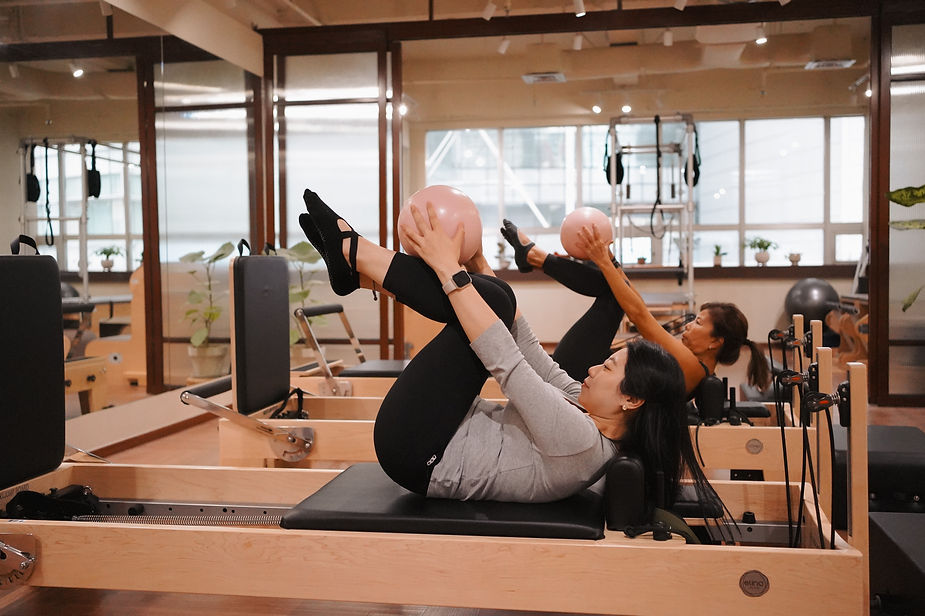
At The Core Reformery, beginner classes are called Align. They run at our Purvis Street studio in small groups of four.
What happens in your first class
Getting to know the reformer
Your first class starts with the basics: how the reformer moves, how to adjust the springs, and how your body connects to the machine. It looks more complicated than it is. By the end of the session, most people feel like they understand the equipment — and more importantly, they understand why the movements are the way they are.
Small group, real attention
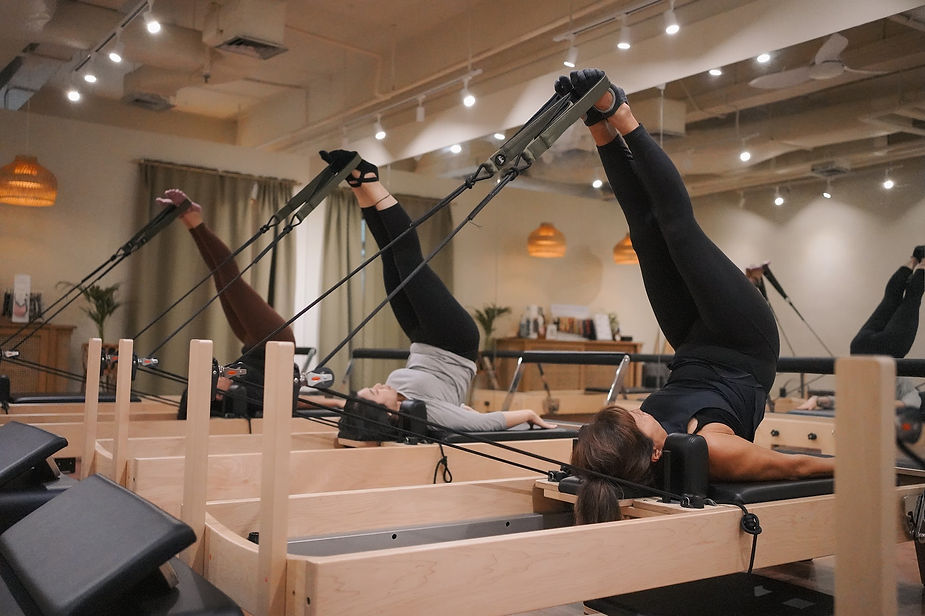
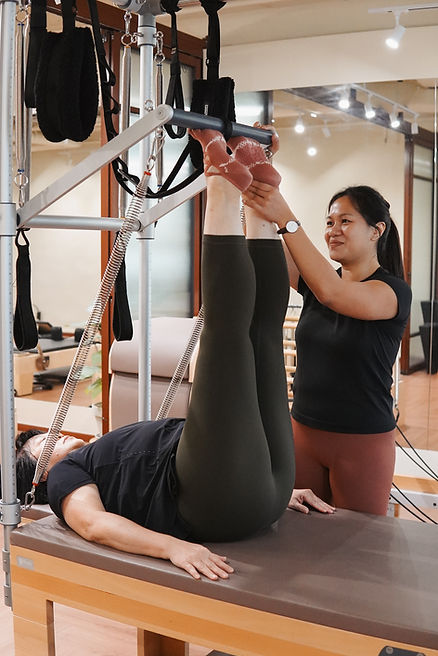
With a maximum of four people in class, your instructor can actually see you. They’ll correct your form, adjust the resistance for your body, and notice if something isn’t working. This is different from a class of fifteen where the instructor is managing traffic. Here, the work is specific to the people in the room.
What you’ll feel
Reformer Pilates targets deep stabilising muscles that most forms of exercise don’t reach. The work is slow and deliberate — it’s not about getting out of breath, it’s about being precise. Most people leave their first class feeling more switched on than exhausted. You might feel unexpected soreness 24–48 hours later in places you didn’t know you had. That’s normal.
If you’re coming back from an injury
Reformer Pilates is one of the most adaptable forms of movement available — but how you access it matters. If you’re managing a significant injury, chronic pain, or post-surgical recovery, a group class isn’t the right starting point, even a small one. The instructor’s attention is shared, and the class follows a structure designed for the group.
For injuries, we recommend starting with private reformer Pilates sessions. This gives your instructor the full picture — your history, your compensations, what you can and can’t load — before building a programme around you specifically. Once you’ve established a foundation, moving into a small group class makes much more sense.
If you’re unsure which is right for you, WhatsApp us a message before booking. We’ll be honest with you.
If you’re postpartum
Postpartum recovery is not a general fitness goal — it’s a specific physiological process, and it needs specific attention. Reformer Pilates is genuinely one of the best tools for rebuilding deep core connection, supporting pelvic floor recovery, and relearning how to load the body after pregnancy and birth. But for postnatal clients, we strongly recommend starting with private sessions rather than group classes.
Here’s why: in a private session, your instructor works entirely around you. They can assess how your body is responding, adjust the programme as you progress, and pick up on things that would be easy to miss in a group setting. It’s a level of care that a shared class — even with four people — simply can’t replicate.
Group Align classes are a great next step once you’ve built that foundation privately. But starting there isn’t the right move if your body is still in recovery. If you’d like to talk through where you are and what makes sense, reach out before you book — we’re happy to help you figure it out.
What to wear and what to bring
Grip socks are required — you can bring your own or purchase a pair at the studio. Wear something comfortable and fitted enough to move in. You’ll be lying down, seated, standing, and kneeling, so avoid anything too loose or bulky around the waist. Bring water.
That’s it. You don’t need any prior experience, any particular fitness level, or any Pilates knowledge. You just need to show up.
What happens after your first class
After your trial, your instructor will have a clearer picture of where you are. Align is where beginners stay until the foundation is solid — and when you’re ready to progress, we’ll tell you. There’s a natural path from Align into more advanced work, and your instructor tracks that progression with you over time.
Nothing is rushed. The first class is about orientation — yours and ours.
Align classes run at The Core Reformery’s Purvis studio in small groups of four. Ready to book your first class? Find us at 5 Purvis Street, or drop us a WhatsApp at 85982408 if you’d like to ask anything first.
-
 The Core Reformery
- 2026-05-22
- 3 min read
Recent Posts