Pilates and Mental Health: Why Sometimes Just Showing Up Is Enough
October is Mental Health Month, a reminder that looking after ourselves goes beyond physical health.
Some days, taking care of your mental health looks like taking deep breaths. Other days, it looks like just showing up.
We often associate exercise with physical goals. Getting stronger, improving flexibility, correcting posture or building endurance. But movement can offer something equally valuable: an opportunity to reconnect with ourselves.
At The Core Reformery Pilates Singapore, we believe Pilates is about more than what your body can achieve. It’s also about how you feel while moving, and how you carry that feeling into the rest of your day.
The Connection Between Pilates and Mental Health
Our physical and mental wellbeing are closely connected.
When we’re stressed, overwhelmed or emotionally exhausted, our bodies often reflect it. We might notice tension in our shoulders, shallow breathing, restless sleep or difficulty concentrating.
Regular physical activity has been shown to support mental wellbeing, including reducing symptoms of anxiety and depression and improving sleep quality, as outlined by the World Health Organization and CDC.
Pilates offers a particular approach to movement. Rather than focusing on speed or repetition alone, it encourages concentration, controlled breathing, precision and body awareness.
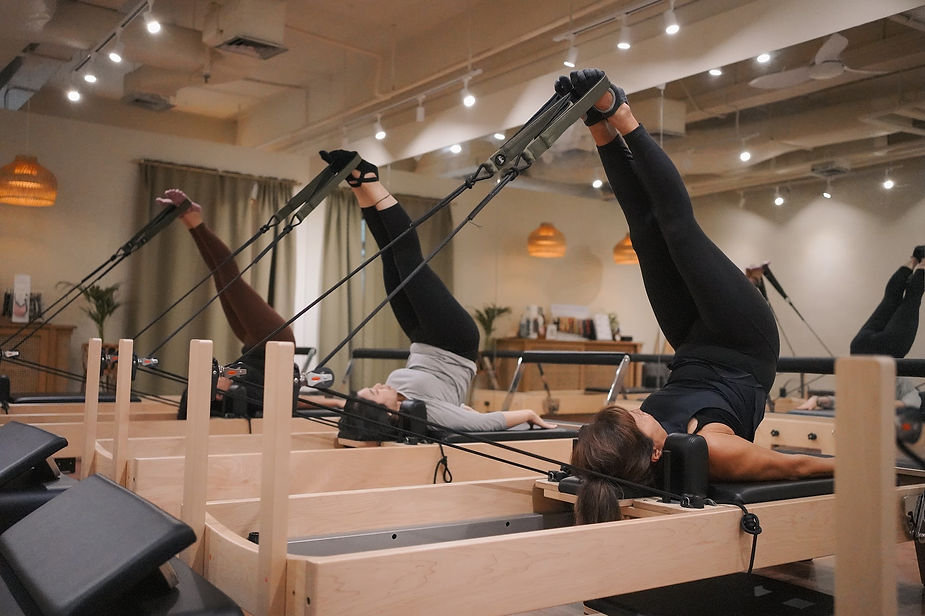
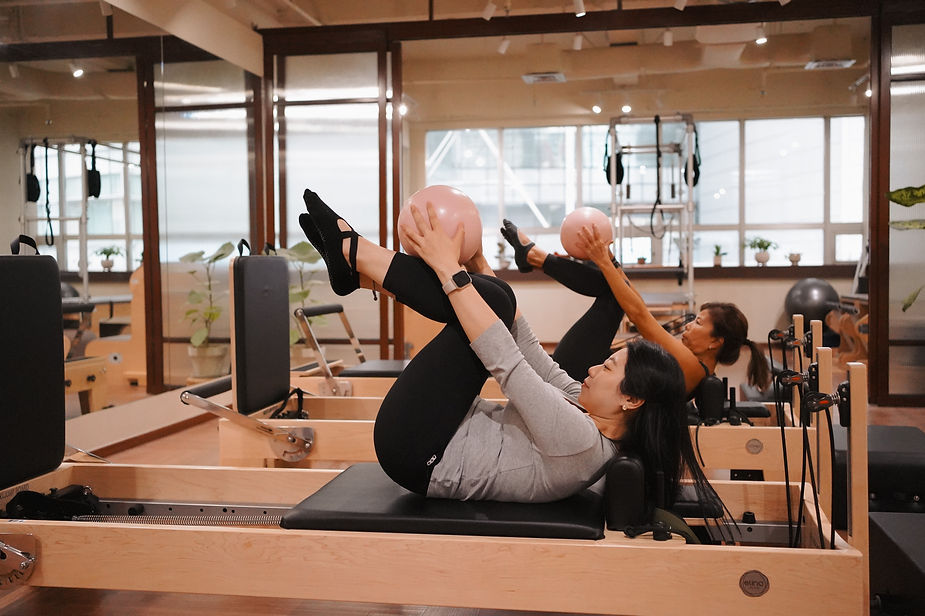
During a Reformer Pilates class, your attention shifts towards how you’re moving. You become more aware of your breathing, the muscles you’re engaging and the alignment of your body.
For a little while, the mental noise of everyday life may become less demanding.
1. Mindful Movement Helps You Stay Present
One of the defining principles of Pilates is concentration.
Every movement requires a degree of attention. Whether you’re maintaining pelvic stability, coordinating your breath with an exercise or controlling the movement of the reformer carriage, you’re encouraged to stay connected to what your body is doing.
This creates an opportunity to practise mindfulness through movement.
For busy professionals and mothers in Singapore, finding time to slow down isn’t always easy. Between work responsibilities, family commitments and the constant demands of daily life, our minds rarely get a moment of quiet.
A Pilates class can provide a dedicated space where your attention belongs to one thing: yourself.
Not your emails. Not your to-do list. Just the movement happening in that moment.
2. Breathing Creates Space to Slow Down
Breathing is fundamental to Pilates.
We often take breathing for granted, yet stress can change how we breathe. Some people find themselves taking shorter, shallower breaths or holding their breath without realising it.
In Pilates, breathing is intentionally coordinated with movement.
This encourages you to become more conscious of your breathing patterns and notice unnecessary tension.
Controlled, comfortable breathing may help you feel calmer and more settled, particularly when combined with gentle, focused movement.
It’s not about forcing yourself to relax. Sometimes, simply becoming aware of your breath is a meaningful starting point.
3. Building Strength Can Build Confidence
The mental health benefits of Pilates aren’t limited to relaxation.
There’s something quietly empowering about discovering what your body is capable of.
Perhaps an exercise that once felt challenging becomes more manageable. Perhaps your balance improves, your movements feel more coordinated or you begin to understand how to engage muscles you previously struggled to connect with.
These changes may seem small, but they matter.
Progress in Pilates isn’t always measured by doing more repetitions or advancing to a harder class. Sometimes, it’s about developing greater control, moving with less discomfort or feeling more confident in your own body.
Over time, these experiences can contribute to a stronger sense of self-trust and accomplishment.
And that confidence can extend beyond the studio.
4. Consistency Creates a Moment That’s Yours
When life becomes overwhelming, self-care is often the first thing we sacrifice.
We postpone exercise because we’re tired. We tell ourselves we’ll return when work settles down, when the children are less demanding or when we feel more motivated.
But taking care of ourselves doesn’t always require a dramatic lifestyle change.
For some, attending a weekly Pilates class becomes a small but meaningful routine. A familiar hour set aside for movement, away from everyday responsibilities.
There’s comfort in that consistency.
And while regular physical activity offers well-established health benefits, consistency doesn’t mean pushing through exhaustion or ignoring your body’s needs.
Some weeks, showing up means challenging yourself. Other weeks, it means choosing a gentler class, modifying an exercise or recognising that rest is what you need.
All of these can be valid forms of self-care.
5. A Supportive Environment Makes a Difference
How we experience exercise matters just as much as what we’re doing.
A crowded, intimidating environment can make movement feel like another obligation. A supportive environment, on the other hand, can help us feel more comfortable exploring our abilities.
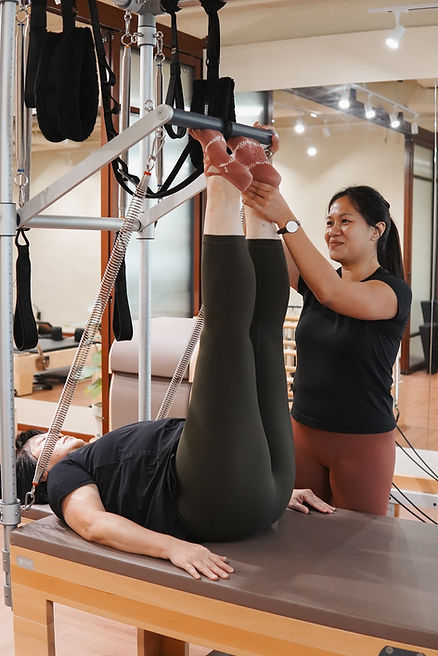
At The Core Reformery, our small-group Reformer Pilates classes in Singapore allow instructors to provide individual attention, thoughtful modifications and guidance suited to different experience levels.
We believe movement should be challenging when appropriate, but never at the expense of feeling supported.
You don’t need to arrive feeling strong, flexible or particularly motivated.
You simply need to arrive as you are.
Pilates Is a Tool for Wellbeing, Not a Cure
While Pilates can be a valuable part of a healthy lifestyle, it’s important to recognise that exercise isn’t a replacement for professional mental health care.
Mental health is complex, and what works for one person may not work for another.
Some people find that movement helps them manage everyday stress. Others may need additional support through counselling, therapy or medical care.
There is no single approach to mental wellbeing, and no expectation that a Pilates class should make everything feel better.
What Pilates can offer is a structured opportunity to move, breathe, reconnect with your body and make time for yourself.
Sometimes, that’s enough for today.
A Gentle Reminder This Mental Health Month
Taking care of your mental health doesn’t have to look the same every day.
Some days, you might feel energised, motivated and ready to challenge yourself.
Other days, getting out of bed, stepping outside or attending a class might already feel like an achievement.
Both deserve acknowledgement.
At The Core Reformery, we believe in progress that respects where you are, not just where you want to be.
Because movement isn’t always about becoming stronger. Sometimes, it’s about giving yourself the space to feel a little better.
If you’re looking to introduce mindful movement into your routine, explore our Reformer Pilates classes or beginner’s guide to Pilates.
Whether you’re new to Pilates or returning after a break, we’re here to help you move with confidence, care and intention.
You can also explore our trial options (click here) and take that first step at your own pace.
-
 The Core Reformery
- 2026-10-16
- 6 min read
Recent Posts